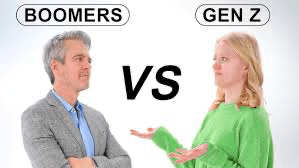
It’s 2026, and your office probably feels like a linguistic melting pot. You might have a Gen Z colleague who signs off emails with «Best,» a Millennial who uses emojis, and a Senior Manager who prefers a formal phone call.
In English, etiquette isn’t just about saying «please» and «thank you»—it’s about matching your «vibe» to your audience. This week, at The London Eye – English Consultant, we’ll take a look at the «Generation Gap» in professional communication.
1. The Email Sign-off: A Subtle Battleground
How you end an email says a lot about your «etiquette style».
| Generation | Preferred Sign-off | The «Vibe» |
| Baby Boomers / Gen X | «Sincerely,» or «Kind Regards,» | Formal, respectful, and traditional. |
| Millennials | «Best,» or «Thanks!» | Friendly but professional; the «safe» middle ground. |
| Gen Z | «Best,» or often no sign-off at all in a thread. | Efficient, casual, and focused on the «now.» |
Pro-Tip: If you aren’t sure, mirror the other person. If they send a formal «Dear [Name],» don’t reply with «Hey!»
2. Punctuation: The «Passive-Aggressive» Trap
Did you know that a simple period (.) can change the meaning of a sentence depending on who reads it?
- To a Boomer/Gen X: A period at the end of a text message is just correct grammar.
- Example: «I will be there at 5.» (Normal)
- To a Gen Z/Younger Millennial: A period at the end of a short message can feel aggressive or «cold.»
- Example: «I will be there at 5.» (To them, this sounds like: «I am angry with you.»)
3. Feedback: Direct vs. Softened
English-speaking cultures already use «soft» language, but the generations handle it differently:
- The «Sandwich» (Older Generations): Compliment → Criticism → Compliment.
- «Great job on the report, but the data is wrong. However, the layout looks amazing!»
- The «Radical Candor» (Younger Generations): They often prefer direct, specific feedback that helps them grow quickly, but they value empathy.
- «The data in section 2 needs a rewrite to be accurate. Let’s look at how we can fix it.»
4. Vocabulary: «Professional» has a New Definition
In 2026, «professional» doesn’t always mean «formal.»
- Gen Z «Lingo» in the Office: You might hear words like «Lowkey» (discreetly) or «Bet» (I agree/Okay).
- Example: «Lowkey, I think the meeting was a bit long, but bet, I’ll have the notes ready by 5.»
- Millennial «Corporate Speak»: Phrases like «Let’s touch base» or «Let’s take this offline.»
- Boomer/Gen X Idioms: Sports-based metaphors like «Ballpark figure» or «Home run.»
5. Phone Calls vs. «Pings»
- The Rule of 2026: Never call a younger colleague without «pinging» them first (sending a quick message to ask if they are free). To many under 35, an unscheduled phone call feels like an emergency!
- The Exception: For older clients or senior leaders, a phone call often shows more respect than a long email.
Your Action Step for Week 12: Think about a colleague you work with often. Which generation do they belong to? Write one sentence you would use to ask them for a favor, adjusting your «etiquette» to match their style!
Example (for a Gen Z colleague): «Hey! Do you have a sec to shoot me that file? No rush, thanks!»
 The London Eye - English Consultant