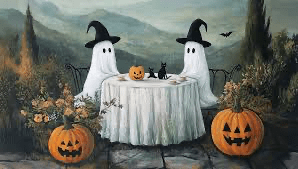
As autumn leaves fall and the nights grow longer, a unique sense of magic and mystery fills the air. This weekend, millions around the world are preparing to celebrate Halloween, a holiday rich in ancient traditions, spooky fun, and a deep connection to remembrance. But it’s not just about costumes and candy! Across different cultures, this time of year takes on fascinating and varied forms, from playful frights to heartfelt tributes to ancestors.
This week, at The London Eye – English Consultant, we’re unwrapping the roots of Halloween, peeking into its global celebrations, and exploring the vibrant traditions of the Day of the Dead. Get ready to expand your vocabulary and discover a world of fascinating customs!
The Ancient Roots of Halloween: Samhain’s Legacy
To understand Halloween, we have to travel back over 2,000 years to the ancient Celtic festival of Samhain (pronounced «SOW-in»). The Celts, who lived in the area that is now Ireland, the UK, Northern France and parts of Spain (like Galicia and Asturias) celebrated their new year on November 1st. This day marked the end of summer and the harvest, and the beginning of the dark, cold winter – a time associated with death.
They believed that on the night before the New Year (October 31st), the boundary between the worlds of the living and the dead became blurred. Ghosts of the dead were thought to return to earth. To ward off evil spirits, people lit bonfires and wore costumes to disguise themselves. This is where many of our modern Halloween traditions began!
- Vocabulary Focus:
- Ancient Roots: the origins or beginnings of something very old.
- Celtic (Kelt-ik): referring to the ancient people and languages of Ireland, Scotland, Wales, etc.
- Samhain (SOW-in): the ancient Celtic festival.
- Blurred Boundary: when the line between two things becomes unclear.
- Warding off: to prevent someone or something from harming you.
- Bonfires: large outdoor fires.
Halloween Around the World: A Spooky Global Party!
While Halloween is most famously celebrated in North America, its traditions have spread, taking on new flavors in different countries.
- United States & Canada: The most well-known celebrations involve trick-or-treating (children dressed in costumes knocking on doors for candy), carving jack-o’-lanterns from pumpkins, wearing elaborate costumes, and attending costume parties. Decorations often feature spiders, ghosts, skeletons, and other spooky elements.
- Ireland & Scotland (Its Birthplace): Here, traditional activities often include «snap-apple» (like bobbing for apples), fortune-telling games, and community bonfires, maintaining a closer link to its Samhain origins.
- Other Countries: Many countries now have Halloween-themed parties, particularly among younger generations. However, the more commercial aspects like extensive trick-or-treating are less common. Instead, it might be a night for themed club nights or private parties.
- Vocabulary Focus:
- Trick-or-treating: the activity of children visiting houses to ask for sweets on Halloween.
- Jack-o’-lanterns: pumpkins with faces carved into them, often lit from inside.
- Elaborate costumes: very detailed and fancy outfits.
- Spooky elements: things designed to be frightening or eerie.
- Fortune-telling: predicting what will happen in the future.
- Commercial aspects: related to buying and selling goods and services.
Día de los Muertos (Day of the Dead): A Vibrant Celebration of Life
Just after Halloween, on November 1st and 2nd, Mexico (and other parts of Latin America) celebrates Día de los Muertos (Day of the Dead). While it might seem similar, it’s distinct from Halloween and focuses not on fear, but on joyous remembrance and celebration of deceased loved ones.
It’s believed that on this day, the spirits of the dead return to visit their families. Families create beautiful ofrendas (altars) in their homes, adorned with photos of the deceased, their favorite foods and drinks, candles, and vibrant cempasúchil (marigolds), which are believed to guide the spirits home with their bright color and strong scent. People also paint their faces as calaveras (skulls), particularly sugar skulls, which symbolize death and rebirth. It’s a time of parades, music, and colorful festivities.
- Vocabulary Focus:
- Deceased loved ones: people who have died.
- Joyous remembrance: happy memories.
- Ofrendas (altars): decorated spaces with offerings for the dead.
- Adorned with: decorated with.
- Cempasúchil (marigolds): a type of flower, often yellow or orange.
- Calaveras (skulls): representations of skulls, often artistic.
- Symbolize death and rebirth: represent the cycle of life and death.
- Vibrant festivities: lively and colorful celebrations.
The Spanish Connection: Samain, All Saints, and «Huesos»
While Halloween’s modern commercial form is relatively new to the peninsula, Spain has deep-seated traditions tied to this time of year:
1. Samain in Galicia: The Celtic Echo
In Galicia, the Celtic heritage has led to a fascinating revival of Samain celebrations on October 31st. Communities embrace the ancient tradition by:
- Carving terrifying faces into calabazas (pumpkins or gourds), similar to the jack-o’-lanterns, to scare away spirits.
- Holding nighttime queimadas (a traditional Galician alcoholic drink served with a spell) to ward off the meigas (witches).
- Celebrating the connection to the dead with food and local festivities.
2. Día de Todos los Santos (All Saints’ Day – November 1st)
Across Spain, the central tradition is the commemoration of Día de Todos los Santos. This is a solemn, national holiday where families:
- Visit cemeteries to clean and decorate the graves of deceased relatives with fresh flowers.
- Gather for special family meals and attend mass.
3. Traditional Sweets and Treats
The culinary tradition is strong! Look for these seasonal delights:
- Huesos de Santo (Saints’ Bones): Marzipan tubes filled with sweet egg yolk.
- Buñuelos de Viento (Fritters of Wind): Light, fluffy doughnuts usually filled with cream.
- Panellets: Small cakes made primarily of marzipan, popular in Catalonia and the Balearic Islands.
This time of year truly showcases how different cultures approach the ancient human questions of life, death, and remembrance. Whether you’re carving a spooky pumpkin or setting up a beautiful altar, you’re participating in traditions that connect us across centuries and continents.
How do you celebrate this time of year, or what new tradition would you like to explore? Share your thoughts in the comments!
 The London Eye - English Consultant