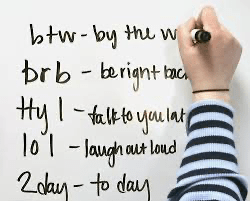
Ever feel like you need a different dictionary just for your phone? You’re not alone. The way we communicate online—through texts, emails, and social media—has evolved into its own style of English. It’s fast, a bit informal, and full of abbreviations. Mastering this digital dialect isn’t just about understanding slang; it’s about knowing how to sound natural and appropriate in modern English.
This week, at The London Eye – English Consultant, we’re diving into the fast lane of digital English. Get ready to learn the art of being clear, concise, and cool online.
Decoding Common Acronyms
The key to reading digital English quickly is understanding common acronyms. They are everywhere and used by everyone, from friends to colleagues.
| Acronym | Stands for | Used for | Example |
| LOL | Laughing out loud | To show you find something funny. | «That video is hilarious! LOL« |
| BTW | By the way | To introduce a new, often related topic. | «I’m heading to the store. BTW, do you need anything?» |
| FYI | For your information | To share a piece of information quickly. | «FYI, the meeting was moved to 2 PM.» |
| IMHO | In my humble opinion | To offer an opinion without sounding too strong. | «IMHO, the first option is better.» |
| ASAP | As soon as possible | To say something needs to be done quickly. | «Can you send me the report ASAP?» |
| BRB | Be right back | To let someone know you are briefly stepping away from the conversation. | «Phone’s ringing, BRB.» |
| IDK | I don’t know | A quick way to express uncertainty. | «What time is the party? IDK.» |
| TTYL | Talk to you later | A common sign-off for ending a chat. | «Gotta go to class. TTYL!» |
| TMI | Too much information | Used when someone has shared something overly personal or unnecessary. | «He told me about his dentist trip—TMI!» |
| IRL | In real life | To contrast something digital/online with actual life. | «We met online, but we’re meeting IRL next week.» |
| TBH | To be honest | Used when offering a frank or candid opinion. | «TBH, I didn’t love the new restaurant.» |
Your tip: The next time you see an acronym you don’t know, don’t just guess! Look it up. This is a great way to build your digital vocabulary.
Punctuation and Tone: The Unwritten Rules
In digital communication, tone can be tricky. A simple period can make you sound angry, while an emoji can soften a message.
- Avoid the Final Period: Ending a short text message with a period can sometimes make it seem like you are annoyed.
- Slightly Formal/Cold: «Okay.»
- Natural and Neutral: «Okay» or «Ok»
- Emojis are Your Friends: A well-placed emoji can prevent misunderstandings. A smiley face after a simple sentence can show you’re being friendly.
- Multiple Exclamation Marks!!! Use them to show genuine excitement or enthusiasm.
- Enthusiastic: «The new movie is out tonight!!!»
- Less Excited: «The new movie is out tonight.»
The Art of the Shortform
Digital English is about efficiency. We often shorten words to save time.
- «Gonna» and «Wanna»: In very informal texts, people often write gonna (going to) and wanna (want to). These are not used in formal emails, but they’re very common in chats.
- Initialisms: You’ll see words and phrases simplified.
- «Cuz» for «because»
- «Plz» for «please»
- Remember that in formal emails, you must use full words and proper grammar. Acronyms like LOL and BTW are fine in a casual email to a colleague you know well, but never in a formal business report.
By getting comfortable with these digital communication habits, you’re not just learning English; you’re learning how to sound like a native in the places where modern communication happens the most.
What’s your most used English acronym? Share it in the comments below!
 The London Eye - English Consultant