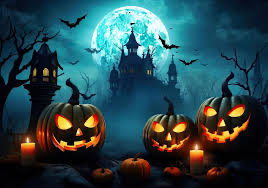
Halloween, celebrated on October 31st, has its roots in ancient Celtic traditions. It marked Samhain, the end of summer and the beginning of winter, a time when the veil between the living and the dead was believed to be thin. The Celts believed that spirits would return to Earth on this night, and bonfires were lit to ward off evil spirits. This week, at The London Eye – English Consultant, we’ll dive into the roots of this traditional festivity taking you to present-day celebrations.
The Roman Influence:
When the Romans conquered Celtic territory, they combined their own festivals of Pomona (goddess of fruit and abundance) and Feralia (honoring the dead) with Samhain. This led to the creation of Parentalia, a festival honoring the dead that took place on February 15th and 16th.
The Move to America:
Halloween traditions were brought to America by European settlers, primarily from Scotland and Ireland. In the 19th century, Halloween became a popular holiday in the United States, with children dressing up in costumes and going door-to-door asking for treats. To know more about the origin of this tradition, click here.
The Etymology of Halloween
The word «Halloween» is a contraction of «All Hallows’ Eve,» which refers to the night before All Saints’ Day. «Hallow» comes from the Old English word «halig,» meaning «holy.» Therefore, «Halloween» literally means «Holy Evening.»
Halloween Traditions Today
Today, Halloween is celebrated in many countries around the world. Some of the most popular traditions include:
- Trick-or-treating: Children dress up in costumes and go door-to-door asking for candy.
- Carving pumpkins: Pumpkins are hollowed out and carved with faces, often with lights inside.
- Costume parties: People of all ages dress up in costumes, often as characters from movies, TV shows, or historical figures.
- Decorations: Homes and businesses are decorated with spooky themes, such as ghosts, witches, and spiders.
Similar Festivities Around the World
While Halloween is primarily celebrated in Western countries, there are similar festivals in other parts of the world. For example:
- Día de los Muertos (Day of the Dead): Celebrated in Mexico and other Latin American countries, this holiday honors the deceased with offerings of food, drink, and flowers.
- All Saints’ Day: A Christian holiday celebrated on November 1st, honoring all saints.
- Chuseok: A Korean harvest festival celebrated in autumn, featuring traditional food, games, and ancestral rituals.
Halloween Vocabulary
- Costume: A set of clothing worn to disguise oneself as a different character.
- Trick-or-treat: The practice of children going door-to-door asking for candy.
- Pumpkin: A large, orange fruit often used for carving jack-o’-lanterns.
- Jack-o’-lantern: A hollowed-out pumpkin with a face carved into it.
- Ghost: A spirit of a dead person believed to appear in a bodily form.
- Witch: A woman believed to have supernatural powers.
- Zombie: A reanimated dead person.
- Vampire: A creature that feeds on blood.
- Mummy: A preserved body, often wrapped in bandages.
- Skeleton: The framework of a human or animal body.
If you want to check how much you know about Halloween, take this Quiz!!!
Halloween is a fun and festive time of year, filled with traditions and superstitions. By understanding its rich history and cultural significance, we can appreciate this holiday even more. We wish you all a very Happy Halloween!! 🎃
Check our PODCASTS section to listen the latest program about Halloween. Happy listening!!!
 The London Eye - English Consultant